The Ford Logo Before the Blue Oval
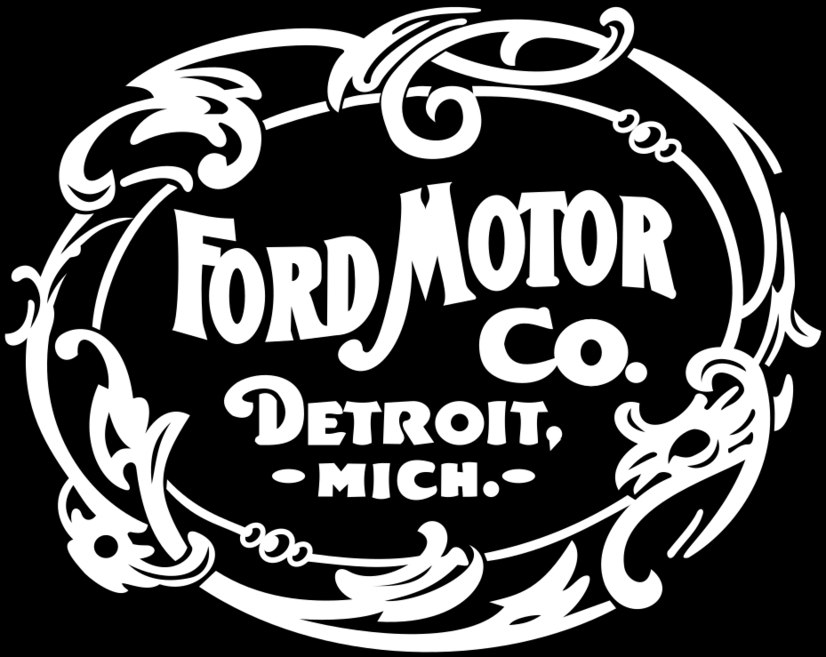
The history of the Ford logo begins before the familiar blue oval became the company’s defining mark. Ford Motor Company was incorporated in 1903, and its earliest identifying marks looked different from the blue oval now associated with the business. Decorative lettering and elaborate borders belonged to the visual world of early automobile advertising, when a manufacturer needed to communicate solidity and craftsmanship in a young industry.12
The familiar script was a later development, traditionally associated with early Ford employee Childe Harold Wills. It should not simply be described as Henry Ford’s handwritten signature. A designed wordmark can suggest personal authorship while being a deliberately constructed, reproducible form. That distinction explains why its lines can remain consistent across millions of uses.2
The script and the frame
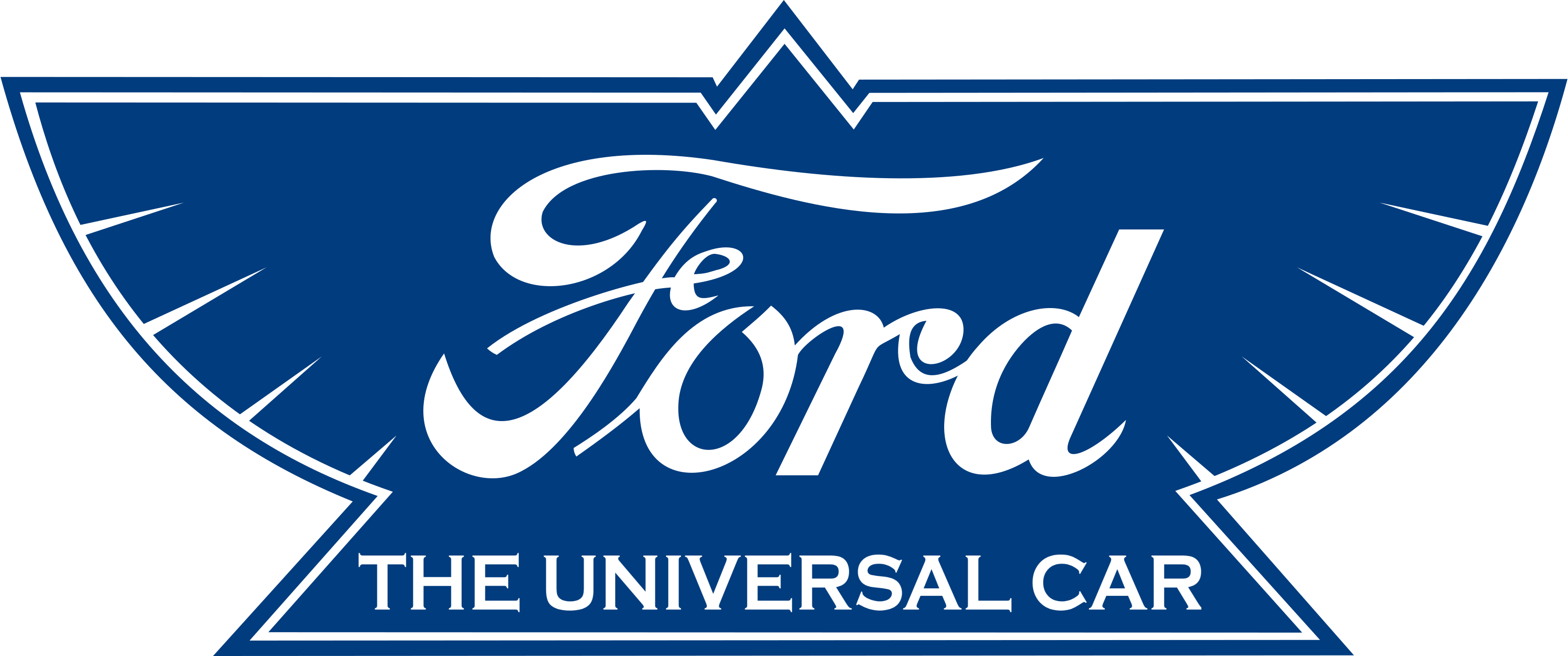
Ford’s lettering and the enclosing oval did not emerge as a single unchanged design in 1903. Early twentieth-century materials show experimentation with different surrounds, including oval forms and the short-lived winged triangle carrying the phrase The Universal Car. These variants reflected a company still establishing how its name should appear.2
An emblem used in an advertisement, a badge fitted to a car, and a corporate mark used on documents need not change simultaneously. That is one reason simplified online timelines can disagree. A responsible account identifies the medium when possible and avoids assuming that every older example disappeared on the date a newer one appeared.
1927 and the Model A
The launch of the Model A in 1927 is a central milestone in the blue oval’s history. The model followed the enormously successful Model T and placed a recognisable blue-and-white Ford badge on a new generation of vehicles. Surviving objects and photographs provide stronger evidence for the badge’s use than speculative accounts of what each colour was meant to make customers feel.13
The oval supplied a stable boundary around the flowing script. That contrast—an orderly enclosure around distinctive lettering—helped the badge remain legible as a physical object on a vehicle. Chrome, enamel, paint, and printed ink gave different versions different appearances without necessarily changing the underlying identity.
Continuity through refinement
Later Ford badges varied in proportions, borders, depth, and finish. Some appeared flatter in print; others used highlights and metallic effects to suit their placement on vehicles. Such differences are part of the history of production and application, not always evidence of a new corporate philosophy.23
The blue oval’s durability comes from retaining its essential relationship between script, colour, and frame. It also illustrates a larger point about industrial design: a logo is experienced through real objects. Looking at dated cars, brochures, and original badges reveals how an identity was actually used, rather than reducing a century of motoring to a row of isolated digital drawings.
The story at a glance
Ford Logo Timeline
- 1903
Ford Motor Company is established.1
- Early 1900s
The distinctive Ford script develops.2
- 1912
A winged-triangle identity appears among the early variants.2
- 1927
The Model A makes the blue oval a significant vehicle badge.13
- Later 20th century
Refinements retain the recognisable script-and-oval structure.2
Follow the evidence
Sources & further reading
Numbered links in the text point to these sources. Dates and interpretations are identified as approximate or disputed where the evidence requires it.